

UX Transformation & Product Strategy
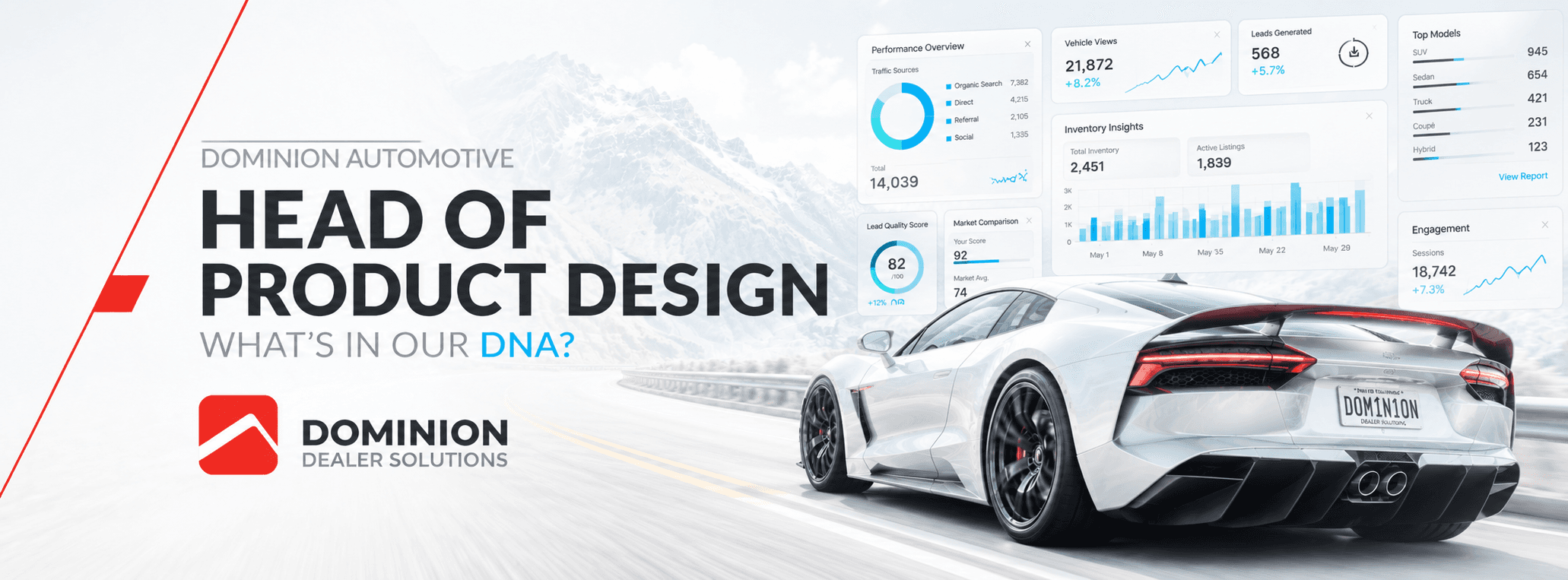
Enterprise UX transformation, product strategy, design systems, customer research, and digital modernization across one of North America's largest automotive retail technology platforms.RoleUX Director / Head of Product Design, Dominion Enterprises (2015 – 2023) — led enterprise product design and UX strategy across the automotive division's marketplace and dealer-facing portfolio.
Business ChallengeA fragmented, legacy product portfolio spanning consumer marketplaces and dealer-facing tools that couldn't absorb a full, disruptive rebuild.
Leadership ResponseMoved the portfolio toward a coherent platform model incrementally — shared design systems and delivery practices — while investing in AI-assisted products (Activator, Car Score) to prove the model before requesting larger platform investment.
OutcomeEstablished shared design systems and cross-functional delivery practices adopted across multiple divisions, unifying product, marketing, and brand experiences under one customer-first vision.
Executive SignalProves sustained, incremental transformation leadership at enterprise scale — choosing systems-first modernization over a disruptive rebuild the business couldn't have absorbed.
Overview
Focus Areas: Enterprise product design, UX strategy, customer research, design systems, automotive marketplaces, SaaS platforms, and digital transformation
Dominion Automotive operates at the intersection of consumer marketplaces, enterprise software, and automotive technology. As UX Director / Head of Product Design, I partnered with executive leadership, product management, engineering, marketing, and analytics to modernize products serving millions of users while improving acquisition, engagement, conversion, and long-term customer value.
Beyond designing interfaces, I helped shape product strategy, customer research, design systems, organizational processes, and the unification of product, marketing, and brand experiences under a shared customer-first vision.
The Decision Behind the Modernization
What Was HappeningDominion's automotive product portfolio had grown into fragmented, disconnected experiences across consumer marketplaces and dealer-facing tools, with legacy technology limiting how quickly the business could modernize.
My MandateAs UX Director / Head of Product Design, I led enterprise product design and UX strategy across the automotive division's marketplace and dealer-facing product portfolio, partnering with executive leadership, product management, and engineering.
The ProblemDense, data-heavy dealer workflows — market intelligence, inventory evaluation — needed to become more usable without stripping away functionality dealers depended on, while legacy technology and shifting business priorities constrained how much could be rebuilt at once.
The Decision I MadeRather than pursuing a single top-down platform rebuild, we moved the portfolio toward a more coherent platform model incrementally — establishing shared design systems and cross-functional delivery practices so consumer marketplace and dealer-facing products could evolve toward consistency without a disruptive full rebuild — and invested specifically in AI-assisted products, Activator and Car Score, to modernize how dealers used data and predictive intelligence.
What I Chose Not to DoRejected a single big-bang rebuild of the entire portfolio, which the business's legacy technology and shifting priorities would not have supported.
Why That Tradeoff Was CorrectIncremental, systems-first modernization let the business keep shipping while still moving toward coherence, and let AI-assisted products like Activator prove the model before asking for larger platform investment.
Organizational InfluenceBuilt and scaled multidisciplinary product design, UX, research, creative, and marketing teams across multiple divisions, establishing leadership structures and operational frameworks that enabled consistent delivery at enterprise scale.
What ChangedShared design systems, reusable components, and cross-functional delivery practices across the portfolio, with Activator (AI-powered predictive marketing) and Car Score (AI-assisted vehicle intelligence) as modernization proof points.
The Challenge
Years of growth had created fragmented user experiences, disconnected products, and legacy technology that limited innovation. The challenge wasn't simply redesigning screens—it was creating a scalable product ecosystem that could evolve without disrupting the business.
Research
Research, usability testing, journey mapping, and analytics became the foundation for prioritization, leading to shared design systems, reusable components, modern UX patterns, and cross-functional processes that aligned teams around measurable customer outcomes.
From Fractured to Unified
Unified product, marketing, social, and brand experiences under a shared customer-first vision became the north star for modernization across the portfolio—connecting discovery, evaluation, conversion, and ongoing engagement into a coherent ecosystem rather than a collection of disconnected tools.
Design System Journey
Design process at Dominion emphasized repeatable quality at scale. We established shared design standards, component documentation, critique rituals, and handoff practices that reduced rework between design and engineering. Product designers partnered with researchers, writers, marketers, and engineers from discovery through launch — with prototypes, specifications, and validation checkpoints embedded in the workflow.
The process was intentionally pragmatic: define the customer problem, validate assumptions, design the smallest complete experience that moves a meaningful metric, ship, learn, and expand. That rhythm helped teams deliver consistently across automotive marketplaces, SaaS tools, and brand campaigns without sacrificing craft.
Product Ecosystem
Dominion's consumer-facing marketplaces served high-intent users navigating complex purchase decisions. We redesigned core discovery and conversion flows to reduce cognitive load — clearer hierarchy, stronger filtering and comparison patterns, improved mobile performance, and content structures that helped users build confidence before committing.
Beyond consumer marketplaces, Dominion operated SaaS and enterprise products supporting dealers, operators, and internal teams. These experiences required dense functionality without overwhelming users — a challenge that demanded strong information architecture, progressive disclosure, and role-aware interfaces. Mobile usage was no longer secondary; we rethought navigation depth, touch targets, form completion, and media performance so critical tasks remained usable on the move.
Marketing, social, and brand experience work ran parallel to product design — campaigns needed to feel premium while driving measurable conversion. We aligned visual language, messaging architecture, and landing experience patterns with the underlying product so users never felt a disconnect between what marketing promised and what the product delivered.
Product Showcase
Activator
Following COVID, I led the vision for Activator—an AI-powered automotive platform that helped dealerships predict buying intent, automate marketing, and transform customer data into actionable insights. Built around predictive AI, customer journeys, real-time analytics, and intelligent campaign management, it represented a bold vision for the future.
Continued investment in legacy technology and shifting business priorities ultimately prevented the platform from reaching its full potential.
Car Score
Car Score reimagined how dealerships evaluate inventory using AI-assisted vehicle intelligence.
The platform combined pricing intelligence, market demand, vehicle condition, merchandising quality, competitive analysis, and predictive scoring into a single, modern experience that helped dealers make faster, smarter inventory decisions.
Like Activator, Car Score reflected my belief that enterprise software should be every bit as intuitive, elegant, and thoughtfully designed as the best consumer products.
Leadership & Collaboration
Built multidisciplinary product, UX, creative, and marketing teams—and partnered with executive leadership on product vision and digital transformation initiatives—aligning product, design, engineering, marketing, and analytics around measurable customer outcomes.
Results
Business Impact
- Led UX strategy across enterprise SaaS platforms and automotive marketplaces.
- Improved customer acquisition, engagement, conversion, and retention through research-driven design.
- Established scalable design systems and cross-functional delivery practices.
- Unified product, marketing, social, and brand experiences.
- Built multidisciplinary product, UX, creative, and marketing teams.
- Partnered with executive leadership on product vision and digital transformation initiatives.
Process Overview
The full transformation arc — from fragmented legacy workflows to a unified, systems-driven product portfolio — is captured in this long-form overview of research, strategy, design, and organizational change across Dominion's divisions.
What I Learned
Dominion reinforced that great enterprise products are built by connecting customer insight, product strategy, design systems, engineering, and leadership around a shared vision.
Technology evolves. Customer expectations evolve.
The fundamentals never do.
Solve real customer problems. Simplify complexity. Build products that help people make better decisions.
Sometimes the work speaks louder than words.
What This Demonstrates
Dominion demonstrates the discipline of modernizing a complex, legacy system without breaking the business that depends on it: building shared design systems and delivery practices that scale across divisions, and betting on AI-assisted products to prove a platform model incrementally rather than all at once.